Why We Use Infrared for Bio-Sensors and Chips
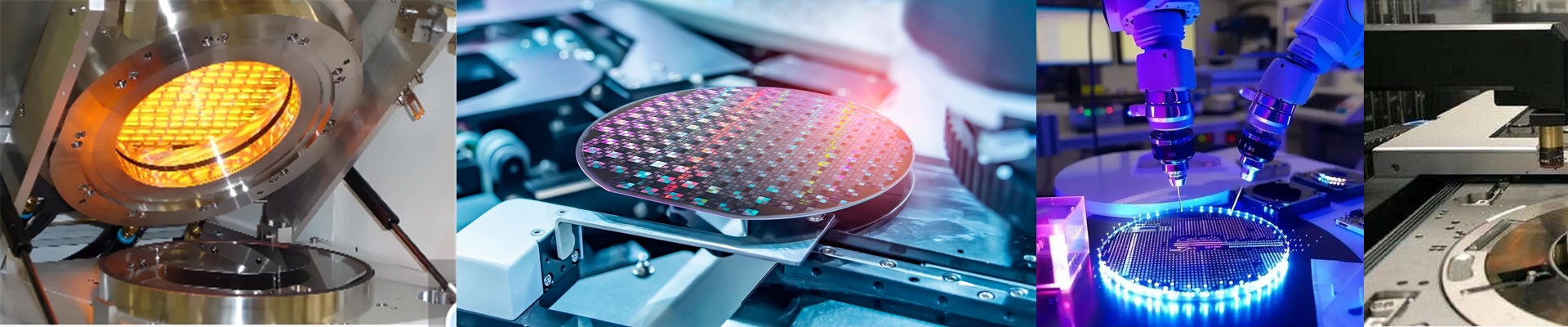
When you’re building bio-sensors, you’re walking a tightrope. You need enough heat to cure your adhesives and photoresists, but if you push it too far, you’ll fry the biological layers. It’s a delicate balance. That’s why we lean on infrared (IR) lamps. Instead of heating up all the air in a room—which is what those old-school convection ovens do—IR sends energy straight to the substrate. It’s direct. It’s clean.
The “Green” Side of the Physics
Think about a traditional drying oven. It’s basically a giant box of forced hot air. You waste a ton of power just warming up the empty space in the chamber, and you have to run heavy-duty filters to make sure no dust or gunk lands on your wafer. IR is different. It hits the material’s absorption band directly. You get heat instantly, and it cools down just as fast. Plus, it’s a much kinder way to run a fab. No combustion gases, no weird emissions from heating elements. Just electricity in, photons out. It’s as simple as that.
The Trade-offs (Because nothing is perfect)
We usually go with short-wave or medium-wave IR. We need that heat to actually soak into the thin-film layers of the sensor, not just sit on the surface. The best part? High-intensity lamps let you shrink your curing tunnel, which saves a lot of floor space. But you have to be careful. If you crank up the watts per centimeter too high, you’ll scorch the organic parts of the sensor. To stop that from happening, we use a tight PID control loop and get the spacing exactly right. We’re talking about keeping the temperature within a tiny $\pm 2^\circ\text{C}$ window. It takes a bit of tweaking, but it’s worth it.
How it Actually Changes Your Day
Switching to IR means you can finally stop relying on those massive, power-hungry blowers. Your HVAC system will thank you. And here’s the real win: when you set these up with zoned controls, you only power the lamps that are actually sitting over a product. No more paying to heat an empty belt. It’s a pretty easy swap for those old oven banks, and it makes the airflow in your cleanroom feel way less chaotic.