


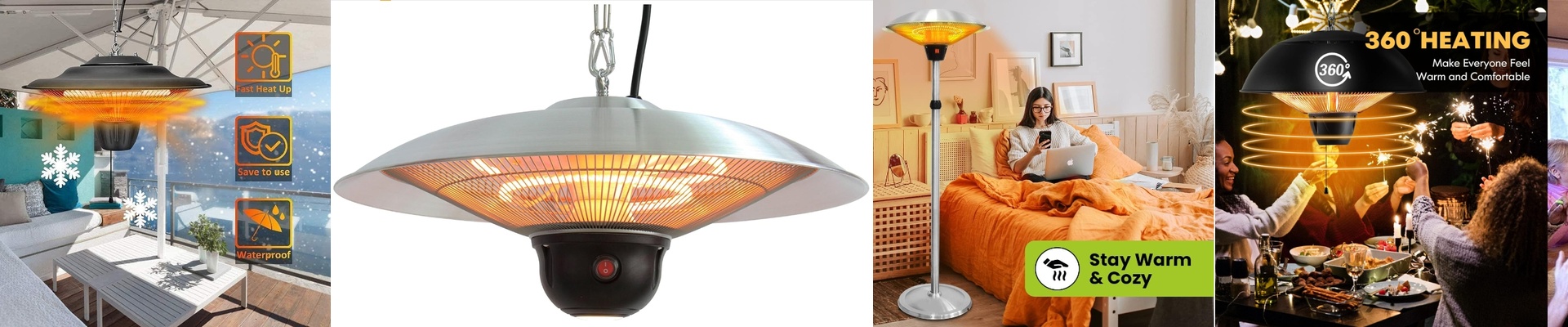

Post-winter training, your muscles don’t just “relax on command.” They seize up, stiffen, and hold tension—dragging out recovery and keeping soreness around longer. Standard space heaters warm the air. Carbon crystal infrared heaters warm the tissue, delivering radiant heat that gets right to the spot where tightness and strain start.
What matters under the hood
Carbon crystal infrared heaters use a high-purity carbon element to produce broad-spectrum infrared energy, with a strong presence in the medium-to-long wave band. That wavelength profile penetrates more effectively than air-heating methods because it reaches muscle and connective tissue directly. In practice, you feel warmth where it counts—no waiting around for the room to heat up. The element comes up fast, holds steady output, and is built to handle frequent on-off cycles without falling off. Paired with a precise thermostat, the unit keeps a consistent comfort level, so sessions stay repeatable and controlled.
Why this fits the recovery picture
For athletes—and anyone in physical therapy—the target is simple: loosen muscle, ease stiffness, and support the body’s natural healing. Infrared warmth encourages local circulation, which helps tight areas release faster and cuts into that “cold-stiff” feeling that hangs on after cold-weather effort. Because the heat is radiant, it doesn’t fight drafts or humidity. Whether you’re outdoors or in a chilly training room, you still get directional warmth you can count on. Used consistently, it can shorten the time to get back to full mobility, and it makes warm-downs feel purposeful instead of optional.
Setup and safety—do it right
Infrared radiant heat works best when the body is in the direct beam. Position the heater to face the treatment area and keep the distance within the manufacturer’s recommended range. Indoors, place the unit on a stable surface with proper clearance from combustibles, and pick a model with overheat protection and tip-over safety. Outdoors, check the IP rating and keep the heater protected from direct rain. One practical note: infrared heats people and surfaces first, so nearby air temperature can feel cooler. Adjust placement and session length to match comfort—don’t chase an ambient air reading.