



On the fab floor, thermal drift isn’t a textbook problem. It shows up as line-width excursion after soft bake, a film that won’t dry clean, or a package that cures cockeyed. When the oven or lamp slips, yield takes the first hit, then the schedule, then the energy bill. Sustainable fab manufacturing isn’t a slogan. It’s holding thermal budgets tight so every watt, every minute, and every wafer earns its keep.
What matters, technically
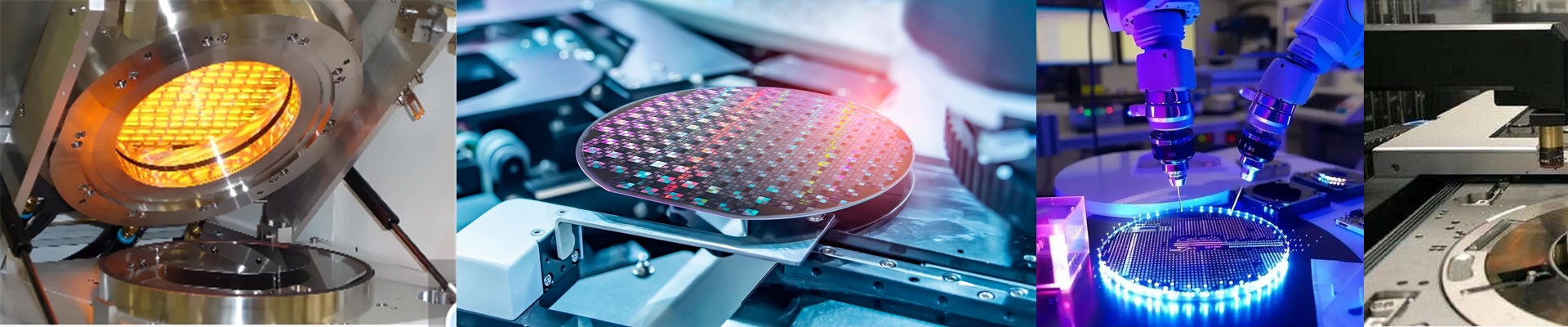
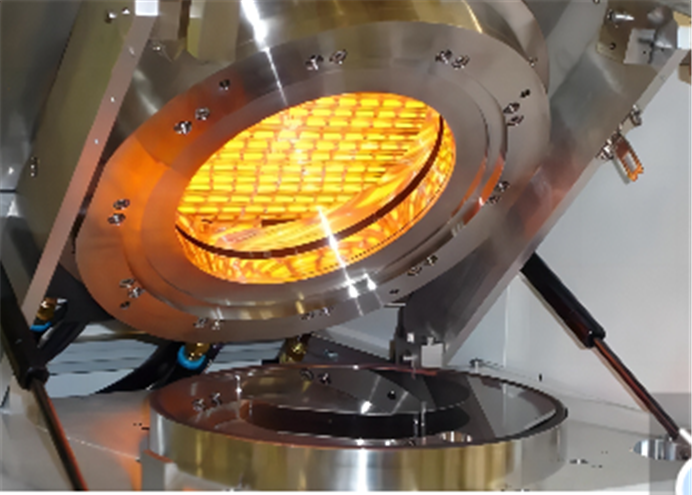
We build thermal systems around the constraints that actually move the needle in semiconductor processing: temperature uniformity, repeatability, particle control, and uptime. That means matching the heating technology and control architecture to the real process window. For photoresist baking, we run short-wave or medium-wave infrared lamps in a quartz-enhanced thermal chamber to hit soft bake and hard bake profiles with repeatability. Across the wafer, we target ±0.1°C uniformity at setpoint. A single degree can shift critical dimensions and throw off sidewall profiles. The controller tracks ramp rate and soak time with enough resolution to prevent overshoot, and lamp output is modulated with closed-loop pyrometry so the thermal dose stays consistent, batch after batch. For wafer drying and cleaning-dry integration, the trick is stripping moisture without kicking up particles. We use a controlled hot-nitrogen purge, laminar flow, and HEPA-grade filtration so the dry cycle doesn’t add particles. Temperature stays within ±0.5°C across the carrier, which protects low-k films and keeps stress-induced defects out. The payoff is dry, spot-free wafers without the yield hit that comes from uncontrolled turbulence. For packaging curing and encapsulation, you need a fast ramp, a stable dwell, and uniform heating across molded bodies and leads. Medium-wave infrared with carbon-fiber-reinforced heater elements gives rapid response and even temperature distribution, and the system holds profile repeatability within 0.2°C from lot to lot. Energy use drops because the unit heats on demand and cools quickly, shortening the cycle without shorting the cure. The hardware has to live in cleanroom reality: Class 1–100 compatibility, 300 mm wafer handling, 24/7 reliability, and a maintenance plan that keeps unplanned downtime at zero. Controls are SEC/GEM compliant, so you can slot the tool into an existing line without rewriting the automation stack.
Why this plays in the fab
Wafer drying. Photoresist baking. Package curing. Cleaning and drying. These aren’t isolated steps—they’re the thermal spine of the line. If one drifts, the whole line pays. In lithography, the photoresist bake sets how the film behaves in the developer. If soft bake temperature wanders, the remaining solvent changes, and critical dimension control suffers. We lock the bake profile so line-width variation stays in spec and rework drops. The same tight control applies to hard bake, stabilizing the resist for the etch and implant steps that follow. Wafer drying after cleaning is where a lot of fabs lose yield quietly. Water marks, organic residues, and particle adhesion usually trace back to incomplete drying or chaotic airflow. Our drying modules run a controlled temperature ramp, hold, and purge that removes moisture uniformly. The process repeats with the same thermal history every time, which cuts scrap and stabilizes the front end. Packaging curing is where throughput and energy use collide. Long oven cycles, high idle power, and uneven heating drive up cost and stretch lead time. Fast-response infrared curing shortens the thermal profile and cuts energy per unit. The cure is repeatable, so delamination risk falls and package warpage is minimized. Sustainability shows up as less scrap, fewer rework loops, and lower energy per wafer. Tight thermal control reduces process excursions, which trims material waste. Energy-efficient lamps and insulated chambers lower power draw without adding cycle time. Reliable components and predictive maintenance stretch service intervals, which means fewer spare parts and fewer truck rolls. The cumulative effect is a fab that runs leaner, with a smaller footprint per good die.
The practical details
Thermal systems only deliver precision when the surroundings are stable. Installation needs attention to cleanroom airflow, exhaust, and utility quality. Nitrogen supply has to meet the flow and pressure spec for the drying and curing profiles; otherwise, you get temperature oscillations and longer cycles. Electrical infrastructure needs clean power and proper grounding to keep lamp output stable and avoid micro-arcing that can generate particles. Compatibility is straightforward for most fabs, but it’s not universal. If you’re running legacy ovens or third-party handlers, confirm the mechanical interface and the communication protocol. Our units support standard connectors and SECS/GEM, but a mismatch in carrier dimensions or tool ports can hold up integration. Plan the retrofit around a short line shutdown, and run a qualification lot to lock the profile before you go to full production. And yes, lamps have a finite life. We schedule replacements at 5,000+ hours, and we monitor output decay so you can plan the change without surprises. That’s the trade: high performance with planned maintenance. It’s a small price for zero unplanned downtime and consistent thermal control across wafer drying, photoresist baking, packaging curing, and cleaning-dry. If sustainable fab manufacturing is the goal, start where heat matters most. Tighten temperature uniformity. Stabilize profile repeatability. Control the particle count. The line will answer with higher yield, predictable throughput, and lower energy per wafer. That’s how modern fabs run—measured, repeatable, and efficient.